When Trich and Neurodiversity Intersect: The Connection Between Hair Pulling and Autism

Dec 16th, 2025

Online test
Find out the severity of your symptoms with this free online test
If you're pulling your hair and are also someone living with autism spectrum disorder (ASD), you're not alone. Research is increasingly showing that trichotillomania, commonly known as hair pulling or "trich", and ASD co-occur more often than once thought. Understanding this overlap can help you find more effective coping strategies and feel less isolated in your experience.
What’s the Connection?
While ASD doesn't cause trichotillomania, research suggests that there is a meaningful relationship between the two. A study that included adults with trichotillomania found that autistic traits were notably common, suggesting that some people may be navigating both experiences simultaneously. Similar research that included children with ASD found that trichotillomania occurs at nearly twice the rate compared to the general population.
Hair pulling shares similarities with the repetitive behaviors commonly seen in ASD, but it's more than just a coincidence. The reasons behind this overlap are complex and multifaceted.
Why Hair Pulling Happens
While we don’t know the exact causes of trich, it is thought that hair pulling plays a key role in emotional regulation. With ASD, it is thought that hair pulling serves specific purposes related to how the brain processes information and regulates emotions. Common triggers to hair pulling include:
Sensory Seeking and Soothing
Sensory processing differences are commonly present with ASD, resulting in atypical responses to sensory stimuli. Hair pulling can be one of many self-stimulating or self-soothing activities used to self-regulate.
Trich has also been linked to sensory processing with pulling thought to satisfy sensory needs.
Stress and Overwhelm
Social situations, unexpected changes, and sensory overload can all trigger stress responses. Hair pulling may emerge as a way to cope with these overwhelming feelings, even if you're not consciously aware of feeling stressed.
Habit and Routine
The tendency toward routine and repetition that's common in ASD can sometimes manifest as repetitive behaviors that become automatic over time. Hair pulling can become deeply ingrained too, especially if it started as a response to stress or sensory needs.
What Helps?
Managing hair pulling when you also have ASD requires a personalized approach that addresses both conditions. Here are some strategies to consider:
Alternative Sensory Opportunities
Finding less destructive alternatives for sensory needs can help replace the hair pulling behavior. Some examples might include:
- Fidget tools that provide similar sensory feedback (textured objects, stress balls, or fidget spinners)
- Playing with textured fabrics or materials (think Velcro, chunky blanket)
- Keeping your hands busy with crafts or activities during high-risk times
Manage Your Environment
The technique known as "stimulus control” involves identifying what usually triggers the urge to pull and then finding ways to minimize exposure to these triggers. This could mean creating calming workspaces, keeping fidget tools handy, or minimizing time in the bedroom if you tend to pull in isolation.
Manage Sensory Input
Since stress, anxiety, and sensory overload can trigger pulling, developing tools to manage these underlying experiences is crucial. This might include:
- regular sensory breaks
- maintaining predictable routines
- using noise-cancelling headphones in overwhelming environments
It may take some trial-and-error to find the strategies that work best for you. That’s where a skilled therapist can help.
Treatment Approaches That Consider Both
When trich and autism overlap, treatment needs to be adapted and strategic. Research highlighting the connection between autistic traits and trichotillomania emphasizes the importance of careful screening and assessment to determine the most appropriate treatment approach.
Behavioral and creative approaches, rather than traditional “talk therapy”, have shown to reduce hair pulling behaviors. Some accommodation may be required to meet individual ways of processing and communicating. Modifications such as visual supports, clear routines, and explicit instruction can make behavioral interventions more accessible too.
Moving Forward
Living with both hair pulling and autism can feel complicated, but understanding the connection between them is empowering. With this understanding, you can find a treatment approach that works for you and with your unique needs. Progress won’t be linear, and some days will be harder than others but that’s ok. Building skills and resilience take time. You deserve care that honors all aspects of who you are and your unique strengths.
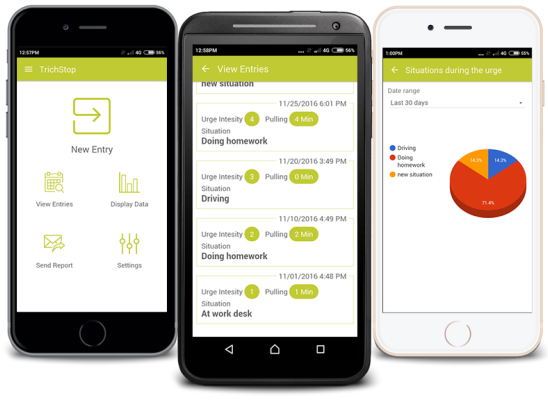
Trichstop has online resources and tools that can help you learn more about hair pulling and strategies that can help. We also have a team of experienced therapists who understand the complexities of dealing with co-occurring disorders. And online therapy means you can see your therapist when it works best for you. When you’re ready, Trichstop can help.
References
1. Grant, J. E., & Chamberlain, S. R. (2022). Autistic traits in trichotillomania. Brain and behavior, 12(7), e2663. https://pmc.ncbi.nlm.nih.gov/articles/PMC9304829/
2. Simonoff, E., Pickles, A., Charman, T., Chandler, S., Loucas, T., & Baird, G. (2008). Psychiatric disorders in children with autism spectrum disorders: prevalence, comorbidity, and associated factors in a population-derived sample. Journal of the American Academy of Child and Adolescent Psychiatry, 47(8), 921–929. https://pubmed.ncbi.nlm.nih.gov/18645422/
3. Grant, J. E., Dougherty, D. D., & Chamberlain, S. R. (2020). Prevalence, gender correlates, and co-morbidity of trichotillomania. Psychiatry research, 288, 112948. https://pubmed.ncbi.nlm.nih.gov/32334275/
4. Patil, O., & Kaple, M. (2023). Sensory Processing Differences in Individuals With Autism Spectrum Disorder: A Narrative Review of Underlying Mechanisms and Sensory-Based Interventions. Cureus, 15(10), e48020. https://pmc.ncbi.nlm.nih.gov/articles/PMC10687592/
5. National Autistic Society. (2020, August 14). Distressed behavior: A guide for all audiences. Retrieved from https://www.autism.org.uk/advice-and-guidance/topics/behaviour/distressed-behaviour/all-audiences
6. National Autistic Society. (n.d.). Preference for order, predictability or routine. Retrieved from https://www.autism.org.uk/advice-and-guidance/topics/about-autism/preference-for-order-predictability-or-routine
7. Stace, S.M. (2020). Behavioral and Creative Psychotherapeutic Interventions with a 6-Year-Old Boy Diagnosed with Autism Spectrum Disorder (ASD) and Comorbid Pediatric Trichotillomania (TTM). Journal of Creativity in Mental Health, 15(4), 414-427. https://www.tandfonline.com/doi/full/10.1080/15401383.2019.1704334
Online test
Find out the severity of your symptoms with this free online test

Start your journey with TrichStop
Take control of your life and find freedom from hair pulling through professional therapy and evidence-based behavioral techniques.
Start Now